Recipes
|
HOW TO GRILL A FROZEN BURGER (Beef or Turkey) Allow burgers to sit out at room temp for around 20 minutes. This will cause ice crystals to melt and make it easier to separate the burgers in each sleeve. Separate by lightly knocking against a non-breakable surface or gently wedge a dull, thin object (butter knife) between each patty. Place rest of burgers back in freezer. --put frozen patties on a hot grill. Flip when juices show on top. This indicates that the burger is no longer frozen in the middle. Usually it takes 6-8 minutes. Grill burgers for 2-3 more minutes. Remove from grill and enjoy.
Classic Beef Stew--feeds 6-- 2-2 1/2 lbs beef chuck chunks, 2 tbsp olive oil, 1clove crushed garlic, 1 tbsp minced garlic, 3 large onions cut up, 3 tbsp flour, 2 cups beef stock, 1 cup red wine, 1 bay leaf, 1 tsp fresh thyme leaves (sub dried thyme if needed), 5 large potatoes--peel and cut into chunks, 5 large carrots cut up, 1 cup frozen peas, salt and pepper to taste Heat a large deep skillet for which you have a cover at med. high...add the oil and crushed garlic clove then stir for 1 minute...remove and discard the garlic...add the beef chunks a few at a time. Turn them so they brown on both sides. Keep adding...Season the beef with salt and pepper as it cooks...remove the beef with a slotted spoon when it is browned. Spoon out the fat from the pan as best as possible...Turn down the heat to medium. Add the onions, stirring, until they soften...Add the flour and cook, stirring, for another couple minutes...Add the beef stock, wine, thyme, bay leaf and the beef chunks. Turn down the heat to low and cover. Let it cook for 30 minutes...Uncover the pan. The mixture should be soupy. Add the carrots, potatoes and turn up the heat to bring it back to a boil. Now turn it back down and cover. Leave alone for at least a half hour. At this point see if the beef and veggies are tender. Cook until they are. Add more salt and pepper during this process if necessary...Add the minced garlic and peas. If the stew is too soupy, remove the cover and turn up the heat until some of the excess liquid has boiled off. If the consistency is good, let sit covered until the peas are heated. When peas are finished, serve and enjoy. If you want to make the stew but not serve it right away, remove the beef and vegetables from the liquid. Place the beef and veggies in one container and the liquid in another. When ready to serve, place back in the skillet, cover and heat. ------------------------------------ Basic Veal Stew--feeds 4 2 lbs Veal Shoulder/Chuck, 3 tbsp olive oil, 1 cup diced onion, 1 tsp minced garlic, 1 cup white wine (you can sub veal stock or beef stock), 2 cups cored/chopped tomatoes (use canned), 1 bay leaf, 1/2 tsp dried thyme, 1 cup pitted black olives, salt and pepper Place a large skillet over medium high heat for a few minutes...Add two tbsp olive oil. One minute later add the veal chunks and brown...remove the veal when it is browned on all sides...clean the skillet removing all liquid. Lower the heat to medium and add the remaining olive oil and onions. Stir them occasionally until soft (5-10 minutes)...Add the garlic and cook for one minute...Add the wine or stock, some salt and pepper and bring the liquid to a boil and leave for one minute...Add the tomatoes, bay leaf and thyme and reduce heat until mixture is simmering...return the veal chunks and turn the heat to low. Cover and allow to cook until the veal is tender. Stir occasionally. This should take around 45 minutes. Add the olives (you don't have to use them if you don't like them). Taste and season according to personal preference. ------------------------------------ Beef Short Ribs--for 8 New recipe coming soon. In the meantime, you can make them using our brisket recipe. Substitute six pounds of beef short ribs for one first cut brisket and cook the same way.
Chicken Soup from Scratch (enough for roughly 15 adults)
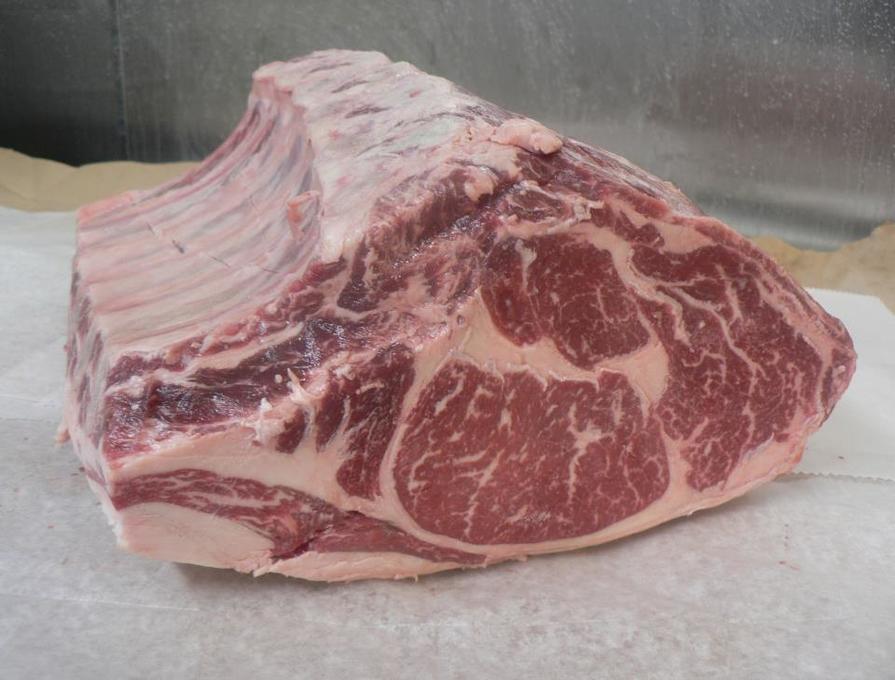
Ingredients: One large bag Mister Brisket Chicken Bones (roughly 8 lbs) Two Large Onions Six Carrots One Bunch Celery 2 Telma brand chicken cubes or (some type of chicken bouillion cube) Quick Story: For years I made the chicken soup at Mister Brisket. It was generally good but not consistent. Some times it was more flavorful than others; sometimes too salty. Occasionally, it was bland. In spite of using similar ingredients, I couldn’t seem to get it right every time. My method was simple: Place the bones and vegetables in a stockpot, add water, bring to a boil then simmer for three hours. Next, I’d remove all the ingredients, strain the hot broth, add some soup base, stir and let cool. That was it. Enter my wife Kelly. I asked her to make the soup and gave her the ingredients. When she was through, I tasted. It was terrific. I had her do it again with the same outcome. A third effort proved as charming as the previous two. I wondered why Kelly was getting a great result every time and asked her to break down her method. When she finished explaining, I discovered there were a few crucial differences between her process and mine. First, she was boiling the bones without adding the root vegetables. Next, she’d remove the bones, add in the vegetables and the chicken base, and then allow the broth to simmer for two more hours. So, not only was she cooking the soup longer, but she’d broken down the soup making into two distinct phases—boiling the bones, then removing them and adding the vegetables and soup base. Her soup tasted great every time. So, here’s the best method—tried and true—for making excellent chicken soup. Kelly’s Perfect Chicken Soup 1) Place the chicken bones in a large stockpot. 2) Add enough water to comfortably cover the bones. 3) Bring the water to a boil 4) Turn down the heat and allow the soup to simmer for two hours 5) Remove the bones from the soup and discard. Or, save the bones, remove the meat from them, and use for chicken salad. 6) Add the root vegetables. You don’t need to clean the carrots but should probably trim the ends of the celery and cut up the onions. 7) Put in the chicken stock cubes and stir until they have dissolved. 8) Allow the soup to simmer for a few more hours. 9) Remove the vegetables and save. They’re delicious to eat or can be placed back in the soup when it is re-heated. Discard them if you prefer. 10) Strain the soup with a mesh colander. It helps to have another large stockpot handy so you can pour the soup slowly from one to the other. 11) Allow the soup to cool to room temperature 12) Pour the broth into a suitable container and refrigerate for a day. 13) Skim the fat from the soup's surface the next day. 14) Place soup in pot, bring back to a boil, let simmer, and then serve. Don’t forget…Mister Brisket sells wonderful Matzo Balls. If you want a great Matzo Ball soup, make the broth and buy the balls from us. SEVEN BONE STANDING RIB ROAST RECIPE Anatomy--The standing rib is the seven bone rib section of a steer. Typically, we use a USDA Prime export rib--which weighs in the range of 16-20 lbs.
|
|
Beef Tenderloin A little anatomy |
|
Turkey Instructions from Mister Brisket You are the proud owner of an Empire Kosher Turkey. This is the finest product of its kind in the country. Please understand that it comes to us frozen. For those of you who think that a fresh turkey is far superior to a frozen turkey, I direct you to the Cleveland Plain Dealer’s turkey article several years ago. In it, I demonstrated in a single blind study, that no one was able to distinguish a fresh turkey from a frozen turkey. There is no such thing as a “real” fresh turkey. Turkeys are sold in boxes marked, “Fresh Turkey – Store at temperatures between 0 degrees Fahrenheit and 38 degrees Fahrenheit.” The turkey growers have been able to redefine the definition of “fresh.” The turkey growers lobby (No, I’m not kidding) is very powerful in this country and has been able to convince the U.S Department of Agriculture that “frozen” (0 – 38 degrees F) is “fresh.” If your turkey is thoroughly defrosted, something Mister Brisket tries to do for all of his customers, read no further, go to TURKEY PREPARATIONS – THE NIGHT BEFORE and begin. If, however, your turkey is not thoroughly defrosted (feel it), do the following: 1. Fill your sink up with cold water. 2. Submerge the turkey in its cryovac wrapping in the sink filled with water. 3. If your turkey is really rock solid, it will take over night to defrost. (Don’t worry. Nothing will happen to you or the turkey.) 4. If it isn’t rock solid, check it every couple of hours to determine if it needs more time in the water. 5. Once it’s defrosted, go to TURKEY PREPARATIONS – THE NIGHT BEFORE for instructions. 6. If your turkey takes all night, you’ll also begin your turkey instructions where it says TURKEY PREPARATION --THE NIGHT BEFORE on the actual day of Thanksgiving. Turkey InstructionsPLEASE READ THIS RECIPE IN ITS ENTIRETY BEFORE BEGINNING. This will allow you time to choose an appropriate Chinese or Vietnamese restaurant if this looks like too much work. (These are the only restaurants open on Thanksgiving or Christmas day.) The following recipe is based on intensive consultations with the National Turkey Board, Empire Kosher Foods, Jacques Pepin, and Mrs. Margaret Wine (my mother). A few words before we start: Congratulations. You have purchased an Empire kosher turkey. DO NOT AT ANY TIME SALT THE TURKEY. In the koshering process, it has been salted. TURKEY PREPARATION – THE NIGHT BEFOREIngredients/Utensils
The turkey 6 Tablespoons of garlic powder 4 Tablespoons of paprika 2 Tablespoons of black pepper (Amounts of seasonings are appropriate for a 20-26 pound turkey, so add or subtract as desired.) A plastic bag large enough to accommodate the bird
1. Remove the cryovac wrap from around the turkey. (You wonder why I’m stating the obvious. Well, believe it or not, I had a customer roast the turkey in the plastic wrap, then have the chutzpah to complain that the turkey smoldered and was foul tasting – pun intended.)
2. Release the legs from the band of skin or the wire hook lock from the edge of the turkey’s “tushie.” You might as well discard the wire hook lock; its purpose has been served.
3. You should find the giblets in the neck and/or the cavity. Many times they are missing due to the inability of Empire Kosher Foods to soak and salt down the giblets. Therefore, you will find an extra set in the bag with the turkey. (Remove, wash them with cold water and place them in a bowl. (Giblets consist of the neck, liver, craw and sometimes the heart.) These will be used for the gravy the next day.
4. Rinse the bird thoroughly inside and out with ice-cold water. You know you’re finished when the water coming from the inside of the bird runs clear. Use a terrycloth towel to dry the outside and inside of the turkey. For some reason, most recipes have you use a paper towel. This is stupid because the paper towels dissolve.
5. You may notice some pin feathers on the wings, legs or the breast. These are the remnants of the feathers from the dry plucking method of feather removal. Take a few minutes and remove the larger ones with tweezers or a strawberry picker. Don’t be upset if you can’t get the smaller ones out. They will not alter the flavor, the doneness time or the texture of the turkey. Once the turkey is roasted, you won’t even notice them. Besides, most of you won’t be eating the skin anyway.
6. Season the turkey both inside and out with the garlic powder, paprika and pepper. Again, do not salt the bird. Also, it is important that you never stuff the turkey the night before. You want to avoid the possibility of bacterial contamination.
7. Place the turkey in the plastic bag and put it into the refrigerator overnight.
THE NEXT DAY – ROASTING THE TURKEY
Ingredients/Utensils
About 1/4 to 1/2 cup vegetable oil (Optional) Stuffing Mix (Optional) Aromatic vegetables such as carrots, celery, onions or parsley for the cavity
An instant read meat thermometer A shallow roasting pan with a rack or a broiler pan with a rack Tin foil -- a piece large enough to cover the entire breast
1. Get up the next morning, relax, eat a toasted bagel, drink a cup of coffee, then go look at the turkey.
2. Preheat the oven at 325 degrees.
3. At this point you can stuff the bird with whatever stuffing you like. There are people who make a big “magillah” of stuffing the turkey. Chestnuts, sausage, Brylcreem, almonds, apricots, etc. The easiest is to use Pepperidge Farm stuffing and follow the instructions on the package. It tastes great and is virtually foolproof. (For a more moist Pepperidge Farm stuffing, double the amount of water.) Remember, however, that the heat of cooking will expand the stuffing in the cavity, so don’t always jam it in – leave a little room. If you don’t like stuffing, place raw aromatic vegetables such as onions, several stalks of celery, a few carrots and some parsley inside the bird.
4. Take a knife and make a slit where the thigh attaches to the body of the turkey. This should be done on both sides. You will notice a ball and socket joint of the thigh attaching into the turkey. Cut some of the thigh meat away so that the thigh socket joint is visible. Also, if you can loosen the connection between the ball and socket joint (the thigh bone and the side of the turkey) but be careful not to totally sever it. You have done this so that the turkey breast and turkey leg will be done at the same time.
5. Close the cavity by pushing the tail up. You want to keep the legs open so that the ball and socket joint will be exposed to the heat. (For those of you who are big on image and presentation and want to submit your turkey to the Cleveland Museum of Art, you can tie the legs after the turkey has been roasted with string. If you don’t have string, dental floss works very well, and you can always use it to floss your teeth after your turkey dinner.)
6. Brush the legs, thighs and back of the turkey liberally with vegetable oil. (Don’t use olive oil or butter – they will burn.) Notice, I didn’t tell you to oil the breast – that will come later.
7. Place the turkey breast side up in a shallow roasting pan or on the roasting rack and tightly cover the breast with the aluminum foil. This is an open pan roasting method – you will not need a cover, nor will you have to baste.
8. Roast uncovered at 325 degrees, 11 minutes per pound. For example: If your turkey weighs 20 pounds, that is 220 minutes or a little less than 4 hours. *Note. If you’re going to make pan gravy, this is a good time to begin (or a good time to open the bottled gravy.)
NOT-FROM-THE-PAN-OR BOTTLE GRAVY
Ingredients
The giblets, excluding the liver One large Spanish onion (the whitish-yellow ones that look like soft balls) A lot of garlic (at least 10 cloves – this insures flavor and no intrusion of vampires) 5 Tablespoons of vegetable oil (2 tablespoons for sautéing the onion and garlic, the other 3 for the gravy) 3 Tablespoons of flour 2 cans (14-1/2 ounces) of chicken broth
1. Place the turkey neck, the craw (the turkey neck looks like a turkey’s neck, and the craw looks like a miniature catcher’s mitt) and the heart into quarts of boiling water. Simmer the neck, craw and heart for about one hour, adding more water if necessary. You’ll know this is done when the craw is fork tender. Remove the craw, neck and heart from the water and throw the water away.
2. Take a knife and chop the craw and heart into very small pieces or slivers.
3. Take the turkey neck and remove the meat from the bone. The neck meat may be stringy, but don’t worry about that. Throw the bone away and mix the neck meat with the craw meat together in a bowl and set them aside.
4. Chop up the garlic and onion into small pieces.
5. Get a frying pan, pour in the 2 tablespoons of hoil, heat gently (between low and medium) and fry the garlic and onions. They are done when the onion is transparent.
6. Add the chopped turkey giblets to the sautéed onion and garlic mixture and mix over a low heat for another five minutes. Set aside.
7. In a saucepan, add three tablespoons of oil and heat at a medium-low heat. Add three tablespoons of flour to the heated oil. Whisk this mixture until it is a golden brown. (This may take 15-20 minutes.) For you French cooking mavens, this is called a roux. In plain down home Yiddish, it’s called an ein brent. In any event, you have created a thick, golden brown globular mass.
8. Open the two cans of chicken broth and slowly add this liquid to your gold flour-oil mixture. Heat and stir with a whisk until the liquid is reduced to about a cup and one-half and it is thick enough so that the liquid sticks to the back of a spoon. You are going to have to continually stir this and it may take up to 30 minutes for the liquid to thicken. Be patient, it works.
9. Add the sautéed onions, garlic and giblets to the gravy and set aside until the turkey is ready to be served. Reheat the gravy on medium until it is boiling, add salt and white pepper to taste. Serve in a gravy boat. Hopefully, you have a very nice thick gravy for your turkey or mashed potatoes. If this sounds like too much work, buy a few bottles of Heinz Turkey Gravy. This will be easier than running to your local Dairy Mart or Convenience Food Market and paying twice as much on Thanksgiving or Christmas day. NOW BACK TO THE BIRD.
DETERMINING DONENESS FOR YOUR TURKEY
A word of caution. It’s been my experience over the years that turkeys may roast inordinately faster than their estimated doneness time. Be mindful of this fact. Also, the larger the turkey, the younger (yes, the younger) it’s going to be. That means it may have a tendency to roast faster than a smaller bird.
1. When the turkey is approximately half way through the estimated roasting time, remove the foil from the breast and brush the breast with vegetable oil.
2. Next, you’re going to use your instant-read thermometer. Spend a few bucks and get a good one – it’s worth it. Keep it in a safe and secure place – not your silverware drawer where you’ll bang the hell out of it. At approximately one hour before your calculated doneness time, insert the thermometer into the breast about half way down. Be sure you don’t touch any fat or bone. When the thermometer reads 165 degrees, internal temperature, remove the turkey from the oven.
3. Carefully lift the turkey from the pan – try using a large bath towel – and place it on a large platter or cutting board.
4. Allow the turkey to stand at room temperature uncovered for about 40 minutes. Don’t worry -- it won’t get cold. The carryover heat will continue to cook the turkey to 175 degrees, which is the desired doneness for poultry.
5. Inspect the thighs. Cut into them if need be. If you see that the meat is still red and the juices are not clear, cut through the ball and socket joints and remove the legs with the thighs attached from the body of the turkey. Continue roasting them on the rack uncovered at 325 degrees for the forty minutes that the rest of the turkey is cooling. (Sorry, there goes your presentation, but you can still scotch tape them back or just prop them up. 6. After the 40-minute rest period, remove the turkey legs/thighs from the oven, assuming they needed more roasting time, and let them rest at room temperature uncovered while you remove the stuffing from the cavity, carve the breast and sever the wings.
SLICING
Have an extra platter handy. If you did not detach the legs, gently pull the whole leg (drumstick and thigh attached) away from the breast and cut the skin between the abreast and the legs. You should be able to see the joint of the turkey between the breast and the thigh. With a knife, separate this joint. Do the same thing with the other whole leg. The same process is true for the wings. Separate the first portion of the wing (that is the portion that is closet to the breast) from the joint attached to the breast. Repeat with the other wing. You should now be looking at a wingless, legless turkey breast unable to fly or walk. Remove the skin of the breast and look for the grain of the breast meat. Cut across or against this grain into slices. If you have stringy meat, stop. You’re cutting the wrong way. ----------------------------------------------------------------------------------------------------------------------------- TURKEY BREAST RECIPE As with our turkeys, we currently purvey Empire brand turkey breasts. Our turkey breasts typically weigh six to seven pounds and feed eight adults. To cook one to perfection, do the following: 1) Make sure turkey breast is fully defrosted. The best way to accomplish this task is to leave the turkey breast in the refrigerator for 48 hours prior to the planned time of cooking. Wash the turkey breast thoroughly with cool water prior to cooking. Pat it dry with a towel. 2) Preheat your oven to 325 degrees. 3) Rub your turkey breast with olive or vegetable oil depending upon what you have available. Make sure you rub oil under the skin. Next, season thoroughly the breast with your favorite spices. Typically, garlic powder, paprika and black pepper are excellent choices. Do Not Use Salt as a kosher turkey breast has already been soaked and salted! 4) Place the turkey breast on a flat surface such as a cookie sheet or broiler pan. Make sure the breast is standing upright. If it keeps falling on its side, try to pry open the sides so that the breast remains propped upright. 5) Place it in the oven. Roast until the internal temperature is 165 degrees. The cooking time in an average stove will be 2 hours. Many factors affect cooking time, however. For example, a room temperature turkey breast will cook faster than one that is near frozen. Also, age and type of oven make a difference. You may want to start checking the temperature as soon as 1 1/2 hours. 6) Remove the breast from the oven. One way to tell doneness is to examine the skin. If it is a deep golden brown, then the turkey is probably finished cooking. When checking temperature with a meat thermometer, place the instrument deep into the breast but be careful it is not touching bone. If one side appears more done than the other, check temperature on both sides. If this proves to be the case, then place the breast back in the oven. However, flip it around so the side that was more done is now located where the less done half resided. The reason is that some ovens are hotter on one side than the other. 7) When breast is done, allow it to sit uncovered for ten minutes. When ready to serve, slice the meat against the grain and place on a platter. Enjoy your turkey breast! |
| Classic Mister Brisket
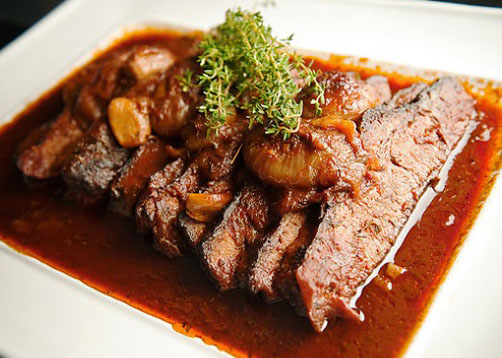
Brisket Recipe Serves 8-10
Utensils
A large old-fashioned roasting pan the blue one with the white speckles. Speckled roasters are usually available in most hardware stores. Be sure to buy the size that holds a 20-22 pound turkey the label on the pan should spell out its capacity. Unfortunately, I have not convinced the roasting pan manufacturers to think of briskets; they think in terms of turkeys. But if its big enough for a 22-pound turkey, itll be big enough for a 6-10 pound brisket. A medium-size mixing bowl A large plastic container with a lid Ingredients One First Cut Mister Brisket Beef Brisket--typically weighing from 5-8 lbs 1 bottle Heinz Chili Sauce 1 envelope Liptons Onion Soup Mix 2 (12 ounce) can cola dont use diet cola Directions 1. Preheat your oven to 325 degrees. 2. Place the brisket fat-side-up into the roaster. (The brisket can be taken right from the refrigerator and put into the roaster it does not have to be at room temperature.) 3. Pour the chili sauce, onion soup mix and the cola into the mixing bowl and stir several times. (Many people are tempted to taste this concoction. Trust me, it tastes challucious. Youll taste it after the brisket is cooked.) 4. Dump this mixture over the brisket. You can lift the brisket up and let some of the liquid spread under it. It wont hurt. 5. Cover the brisket and roast it at 325 degrees until the flat portion is fork tender anywhere from 3 to 4 hours. By fork tender I mean that the meat is tender, but there is still a slight tug on the fork as you pull the fork out of the brisket. If it is not fork tender, cover the brisket and return it to the oven, checking at 15-minute intervals. 6. When the flat section is done (fork tender), remove the brisket from the roaster and allow it to cool on a platter. When the gravy is cooled, pour it into the plastic container, cover and refrigerate it. Wrap the cooled brisket in cellophane and place it into the refrigerator overnight. Once its refrigerated, the roasted brisket and cold gravy can remain there for at least a week before its sliced, reheated and served. Slicing, reheating and serving The easiest thing to do is to bring the cold, roasted brisket (please leave the gravy at home) to the store and we will defat, slice and aesthetically replace it in your roasting pan. If youre too busy with work, car-pooling, tennis lessons, lunches, aerobics classes, power lifting or feel that Taylor Road is impossible for your schedule, youre going to have to slice it yourself. Heres what to do: 1. Get a real sharp knife and trim off all visible fat from the top of the brisket. Do this on a cutting board. 2. Turn the brisket over on what was the fat side. You should be looking at the muscle grain of the brisket. Take your knife and slice the brisket against or across the muscle grain. If the slices appear stringy, stop! Youre slicing the wrong way. 3. Preheat the oven to 350 degrees and remove the cold gravy from the refrigerator. Youll notice that all of the fat has congealed at the top. Remove the fat and throw it away. 4. Heat the gravy in a saucepan until it boils. 5. Pour this hot gravy over the brisket slices, cover the roaster and reheat your brisket for one hour at 350 degrees. |
|
Individual Tenderloin STEAK RECIPE (FILET MIGNON) 1 tenderloin steak per person We can cut the tenderloin into 1-1/2 to 2 inch thick pieces. You will have anywhere from 4 to 6 steaks that resemble thick hockey pucks. Depending upon size, there may be an odd tail piece. This is good for stir-fry or sautéing with peppers and onions. You will also notice ground meat wrapped for the freezer. This is from the trimmings. Directions Directions
|
![]() |
Mister Brisket® The Highest Quality Meat, Poultry & Seafood Delivered Right To Your Door! 2156 South Taylor Road Cleveland Heights, Ohio 44118 (216) 932-8620 Fax (216) 321-6556 Toll Free 1-877-BRISKET (274-7538) E-Mail Your Order to Mister Brisket: misterbrisket@earthlink.net |
|
|
|
| Home
|